
$USO $CL_F $CNY
#NikkiHaley #JoeBiden #DonaldTrump #IranOil #ChinaEconomy #OilPrices #IranSanctions #USPolitics #CrudeOil #EnergyMarket #GlobalTrade #USDEconomy
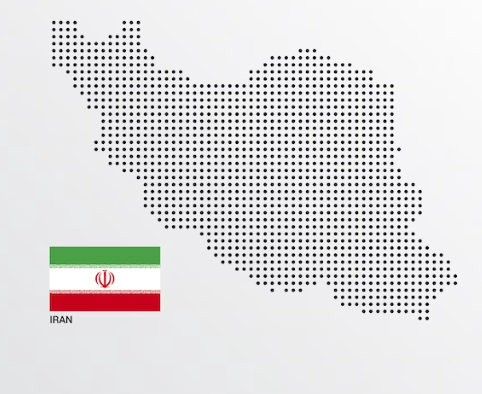
Nikki Haley, the former governor of South Carolina and a prominent Republican voice, has recently voiced strong criticism of the Biden administration’s approach to managing Iran’s oil exports. Haley argued that under Biden’s leadership, Iran’s crude oil exports have increased dramatically, almost quadrupling in volume, with a significant portion of that oil flowing to China. According to Haley, Biden’s failure to enforce existing sanctions and his perceived weakness on Iran has provided Tehran with a substantial financial lifeline—a development that not only undermines U.S. foreign policy but also bolsters Iran’s nuclear ambitions. This scenario, she claims, could lead to heightened geopolitical tensions in the region, further destabilizing global energy markets. The concerns are exacerbated by the growing cooperation between Tehran and Beijing, which has shown no signs of slowing down. For China, securing an energy supply from Iran is crucial to sustaining its massive industrial machine, particularly amid volatile global oil prices.
Haley’s criticisms pave the way for a comparison with former President Donald Trump’s foreign policy stance toward Iran. Under Trump’s administration, the so-called “maximum pressure” campaign aimed to reduce Iran’s revenue streams by cutting off its ability to sell oil internationally. Trump had reimposed harsh sanctions, and through consistent enforcement, Iran’s government budgets were squeezed—limiting their capacity to fund international ventures and Tehran’s nuclear ambitions. As Trump gears up for a potential return to the White House in the next election, he has pledged to reinstitute these stringent sanctions. However, while the policy may aim to suppress Iran’s oil revenue and diminish its global influence, an aggressive stance also carries potential blowback, especially for the U.S. economy. Any interruption in oil supplies from Iran to global markets could create an upward shock to oil prices, raising the cost of energy for American consumers—a risk that Wall Street is already weighing closely.
An intricate layer to this discussion centers around the global oil market and the increasingly intricate relationship between oil and geopolitical strategy. One of the biggest questions revolves around how reinstituting Trump’s ‘maximum pressure’ policy would impact global crude prices. With countries like China heavily reliant on Iranian oil, any U.S.-led crackdown could result in tensions flaring between Beijing and Washington, potentially leading to retaliatory measures. This could be particularly problematic given both countries are among the largest economies in the world. The Chinese yuan ($CNY) has been under pressure due to trade uncertainty, and an oil disruption would exacerbate China’s economic volatility. On the flip side, U.S. crude oil prices as reflected in indexes like $CL_F and $USO, may see a significant rally if supply constraints materialize. Sharp increases in prices could either serve as a boon for U.S. oil producers or a burden for industries reliant on affordable energy.
Lastly, there’s the concern of how Trump’s proposed economic sanctions, while effective in limiting Iran’s financial capabilities, might have a destabilizing effect on the U.S. dollar itself. Should the global energy markets start shifting away from trading oil in U.S. dollars—a long-standing hallmark of its global financial influence—there could be significant ramifications for the U.S. dollar’s position as the world’s reserve currency. China, in particular, has been pushing for oil trade deals denominated in yuan rather than USD to hedge against Washington’s economic power. Any reduction in dollar-denominated oil trade would reduce global demand for USD, putting long-term pressure on its value. This could send ripples across multiple financial markets, further complicating the Federal Reserve’s efforts to tackle inflation at home. Therefore, while Trump’s policy may yield short-term geopolitical gains, a broader, long-term economic perspective indicates that the fallout could challenge the U.S. in ways beyond just oil.




Comments are closed.