
#Gold #Silver #StockMarket #Recession #InterestRates #SafeHaven #EconomicDownturn #Investing
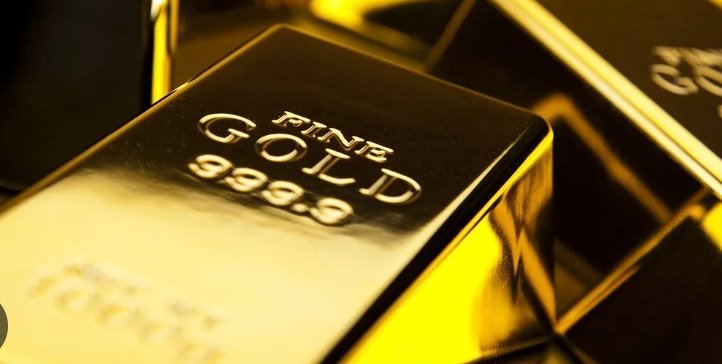
In the wake of a bleak jobs report that revealed deeper issues within the economy’s structure, analyst expectations of a “soft” landing quickly turned to fears of a “crash landing,” causing a widespread selloff in the stock market. This selloff was not just confined to the U.S. but witnessed globally, wiping an astonishing $6.4 trillion off worldwide stock markets. Amid this economic turmoil, gold and silver, typically regarded as safe havens during market chaos, also experienced significant drops. Specifically, gold’s price tumbled by 3.2 percent at its daily low, highlighting a paradox in the typical market behavior where gold is considered a stabilizing asset.
The decline in gold and silver prices during a broad market selloff raises questions about their role as safe havens. Usually, in the early stages of a bear market, it’s not uncommon for gold to sell off alongside stocks. This counterintuitive behavior can be attributed to investors liquidating profitable gold positions to cover losses in their stock portfolios. Additionally, gold serves as a highly liquid asset, making it easier for investors to sell it quickly to meet margin calls during a stock market downturn. Despite the initial drop, gold and silver tend to recover more swiftly than equities, adhering to their long-term status as a hedge against economic instability.
Furthermore, the underlying factors that contribute to gold’s appeal as an investment remain robust. During periods of economic uncertainty, gold’s value is influenced by the anticipation of lower interest rates and the consequent return to inflationary policies. As a non-yielding asset, gold typically benefits from lower interest rates as it becomes more attractive compared to yield-bearing investments. Despite a short-term selloff, gold’s fundamentals, coupled with a potential recession indicating deeper and quicker interest rate cuts, solidify its standing as a reliable investment. Similarly, silver, while more volatile and influenced by industrial demand, is fundamentally regarded as a monetary metal and tends to align with gold’s price movements over time.
The recent selloff, unsettling as it may have been, presents a potential buying opportunity for investors, considering the long-term bullish outlook for both gold and silver. With the global economic landscape fraught with uncertainty and the “inflation dragon” possibly on the horizon, precious metals continue to offer a form of financial sanctuary. Despite their short-lived declines amid market panic, the fundamental reasons for investing in gold and silver remain intact, reinforcing their positions as critical components of a diversified investment portfolio.




Comments are closed.