
#USBankDeposits #FederalReserve #StressTests #BankingSector #EconomicIndicators #MarketTrends #LoanVolumes #EquityMarket
In the lead-up to the highly anticipated bank stress tests, the United States banking sector showcased a mix of developments. A slight increase in money-market fund assets by $5 billion contrasted sharply with a notable decline in bank deposits. Seasonally adjusted bank deposits experienced a decrease of $18 billion, settling at $17.594 trillion. This downturn was not an isolated occurrence; on a non-seasonally-adjusted basis, deposits dwindled for the second consecutive week by $14.8 billion. To put it into context, such dynamics indicate a cautious stance from both consumers and businesses, adjusting their liquidity positions amidst growing economic uncertainties.
Upon a closer examination, excluding foreign deposits, the total domestic deposits faced reductions on both a seasonally adjusted (SA) and non-seasonally adjusted (NSA) scale, with outflows of $15 billion and $5 billion respectively. Distinctively, both small and large banks experienced equal outflows of $7.5 billion on a seasonally adjusted basis. However, the picture slightly shifted when considering non-seasonally adjusted figures, where small banks saw greater outflows of $5.9 billion compared to large banks, which astonishingly recorded about $1 billion in deposit inflows. These patterns reflect a nuanced landscape within the banking sector, hinting at differentiated depositor confidence across various bank sizes.
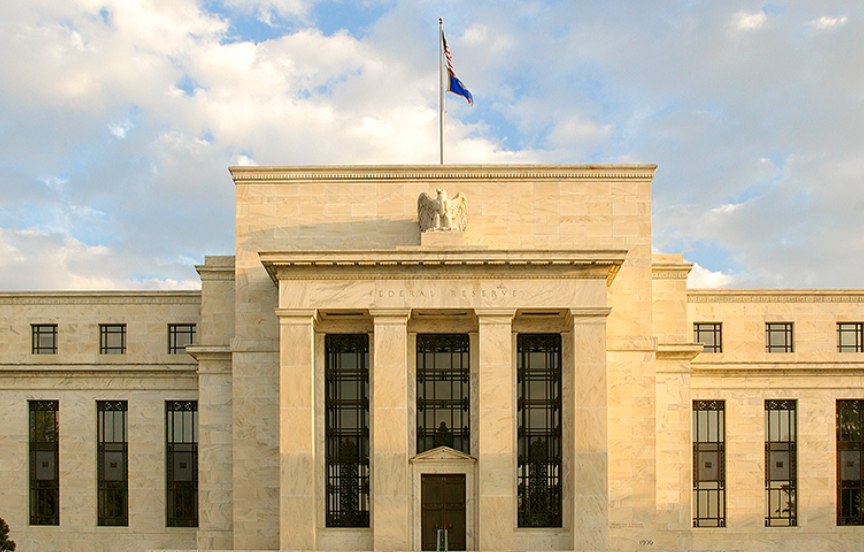
A critical piece of the puzzle is the Federal Reserve’s bank bailout facility, which, despite decreasing marginally, remains exceptionally high at $107 billion. This indicates a substantial reliance among banks on federal support mechanisms, underlining the lingering hesitancy to fully repay these emergency funds amidst a tumultuous market environment. Additionally, the dynamics within the loan market added another layer to the narrative, with a $630 million increase in loan volumes at large banks being overshadowed by a $3.7 billion contraction in loan volumes at small banks. This dichotomy not only emphasizes the varying financial health and risk appetite between large and small banks but also points to a broader theme of cautious optimism and strategic positioning as the banking community navigates through a phase of recalibration and anticipation of tighter regulatory scrutiny.





Comments are closed.