

#Ethereum #Bitcoin #ICBC #DigitalEconomy #Blockchain #Crypto #DeFi #NFT
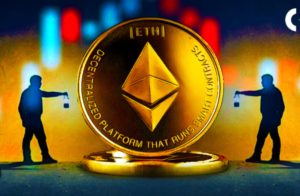
The Industrial and Commercial Bank of China (ICBC), acknowledged as the largest bank in China, has recently made headlines with its publication on the digital currency market, particularly spotlighting Bitcoin (BTC) and Ethereum (ETH). In a striking characterization, the report dubs Ethereum as “digital oil,” underlining its pivotal role and contribution to the burgeoning digital economy. This analogy draws attention to Ethereum’s utility and indispensability in powering digital transactions and applications, paralleling oil’s instrumental role in the physical economy.
ICBC’s report, which gained circulation through insights shared by Matthew Sigel, Head of Digital Assets Research at VanEck, an asset management firm, expounds on the potential of various digital currencies including BTC, ETH, stablecoins, and central bank digital currencies (CBCDs). While Bitcoin is lauded for its finite supply akin to gold, Ethereum receives commendation for its ongoing upgrades aimed at enhancing security, scalability, and sustainability. These ongoing developments are seen as fundamental to providing the technical prowess required for a digital future. Further amplifying Ethereum’s significance, the report underscores its adaptability brought about by Turing completeness facilitated through its Solidity programming language and Ethereum Virtual Machine (EVM). This adaptability has proven instrumental in decentralizing finance (DeFi) and non-fungible tokens (NFT) sectors, with potential extension into decentralized physical infrastructure networks (DePin).
Despite the promising outlook, the report by ICBC also sheds light on certain challenges facing Ethereum, notably in terms of security and scalability. The flexible programming capability, although a boon for innovation, introduces potential security vulnerabilities, complicating audits. Additionally, the processing demands of advanced smart contracts can congest the network, raising transaction costs. Despite these hurdles, Ethereum’s continuous technological advancements aim to mitigate these issues. Remarkably, ICBC’s exploration and acknowledgment of digital currencies, including Ethereum, signal a significant shift, especially given China’s traditionally stringent regulatory stance on cryptocurrency. This viewpoint aligns with recent analytical reports, such as the one by VanEck, echoing the sentiment that Ethereum, as “digital oil,” is central to the future digital financial systems, acting as programmable money that paves the way for an intermediary-free financialization process. VanEck’s bullish outlook, forecasting a potential price surge to $22,000 per Ethereum token by 2030, further illustrates the growing confidence in Ethereum’s capacity to shape the next frontier of the digital economy.


Comments are closed.