
#FederalReserve #FinancialStability #MarkToMarket #InterestRates #BankingSystem #EconomicCapital #SVB #SystemicRisk
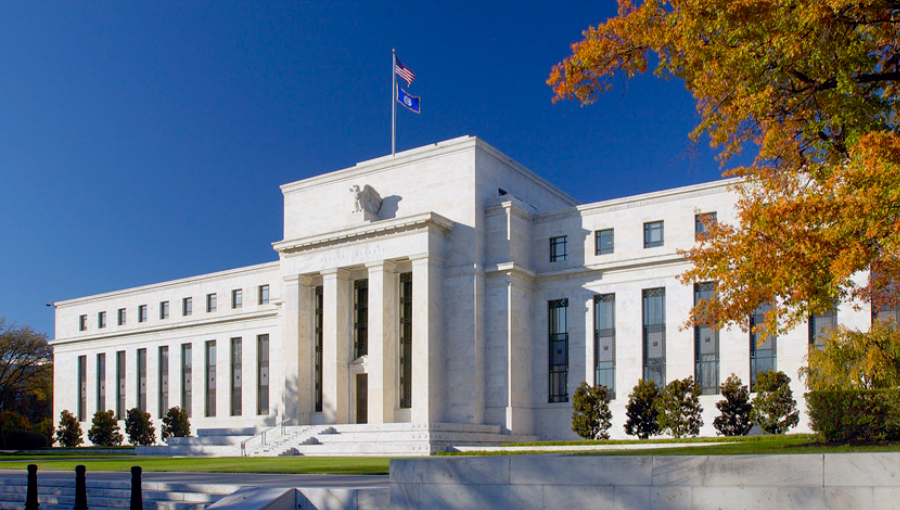
In a recent opinion piece authored by Alex Pollock via The Mises Institute and published in The New York Sun, the argument is laid forth that the true risk to financial stability may not be the market forces or external economic shocks but the Federal Reserve itself. This assertion is based on the analysis of the Federal Reserve’s policies and their unintended consequences on the banking sector and broader financial system. For instance, the Federal Reserve Vice Chairman for Supervision, Michael Barr, testified to Congress asserting the soundness and resilience of the banking system, without addressing the significant mark-to-market losses that have substantially reduced the economic capital and capital ratios of banks.
Further examination reveals that American banks have suffered at least a $1 trillion mark-to-market loss due to normalization of interest rates. This loss, representing about half of the banks’ tangible equity, is particularly concerning as it coincides with potential large losses from the commercial real estate sector. The piece argues that beyond market variables, the Federal Reserve’s actions pose a fundamental risk to financial stability. This is attributed to the Fed’s historical inability to accurately predict and manage the outcomes of its policies, leading to recurring financial crises. The complexity of the global financial system far exceeds the predictive capabilities of the Federal Reserve, despite its resources and intellectual capital.
Moreover, the Federal Reserve’s policies, particularly maintaining low interest rates for an extended period, have built an enormous interest rate risk within the banking system. An emblematic case of this risk materializing is the collapse of Silicon Valley Bank, which had mirrored the Fed’s strategy on its balance sheet. This has not only resulted in significant financial institution failures but also led the Federal Reserve itself to incur mark-to-market losses exceeding a trillion dollars. The conclusion made is evocative of a profound criticism voiced by Senator Jim Bunning to then Chairman Ben Bernanke, questioning how the Federal Reserve can regulate systemic risk when it essentially constitutes the systemic risk itself. This prompts a broader contemplation on the Federal Reserve’s role and its impact on the financial stability it seeks to secure.



Comments are closed.