

#Trump #CryptoDonations #Boycott #FinancialMarkets #GovernmentControl #Cryptocurrency #USPolitics #EconomicFreedom
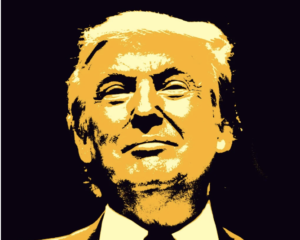
The Trump campaign recently took a firm stance against what it perceives as the overreach of government influence within the United States financial markets by announcing its decision to accept cryptocurrency donations. This move is not just a nod towards the growing significance of digital currencies in today’s economy but also serves as a calculated political statement positioning itself against “socialistic government control.” By embracing cryptocurrency, the Trump campaign aims to highlight its commitment to economic freedom and the decentralization of monetary power.
Cryptocurrency, known for its lack of direct control by any central authority, is lauded for its potential to democratize financial transactions and offer an alternative to traditional banking systems. In this light, the Trump campaign’s adoption of crypto donations is symbolic, underscoring a broader ideological battle against what they describe as socialist tendencies within the current government’s approach to regulating the economic sphere. This choice aligns with a libertarian ethos, favoring minimal government intervention in personal finances and the broader market. It also taps into a growing disillusionment among certain segments of the population with traditional financial institutions and their perceived collusion with government entities.
Moreover, this step might also be seen as an attempt to engage with a younger, tech-savvy demographic that has shown increasing interest in cryptocurrencies as both an investment and a statement against conventional financial systems. The decision to accept crypto donations reflects an understanding of the evolving landscape of political fundraising, where digital currencies can offer not only a new channel for contributions but also a tool for political messaging. As the discourse around cryptocurrency continues to gain traction, the Trump campaign’s move could prompt other political entities to consider similar strategies, thereby impacting the nexus between technology, politics, and finance. This decision might set a precedent, challenging traditional views on campaign financing and pushing the boundaries of political engagement in the digital age.



Comments are closed.